
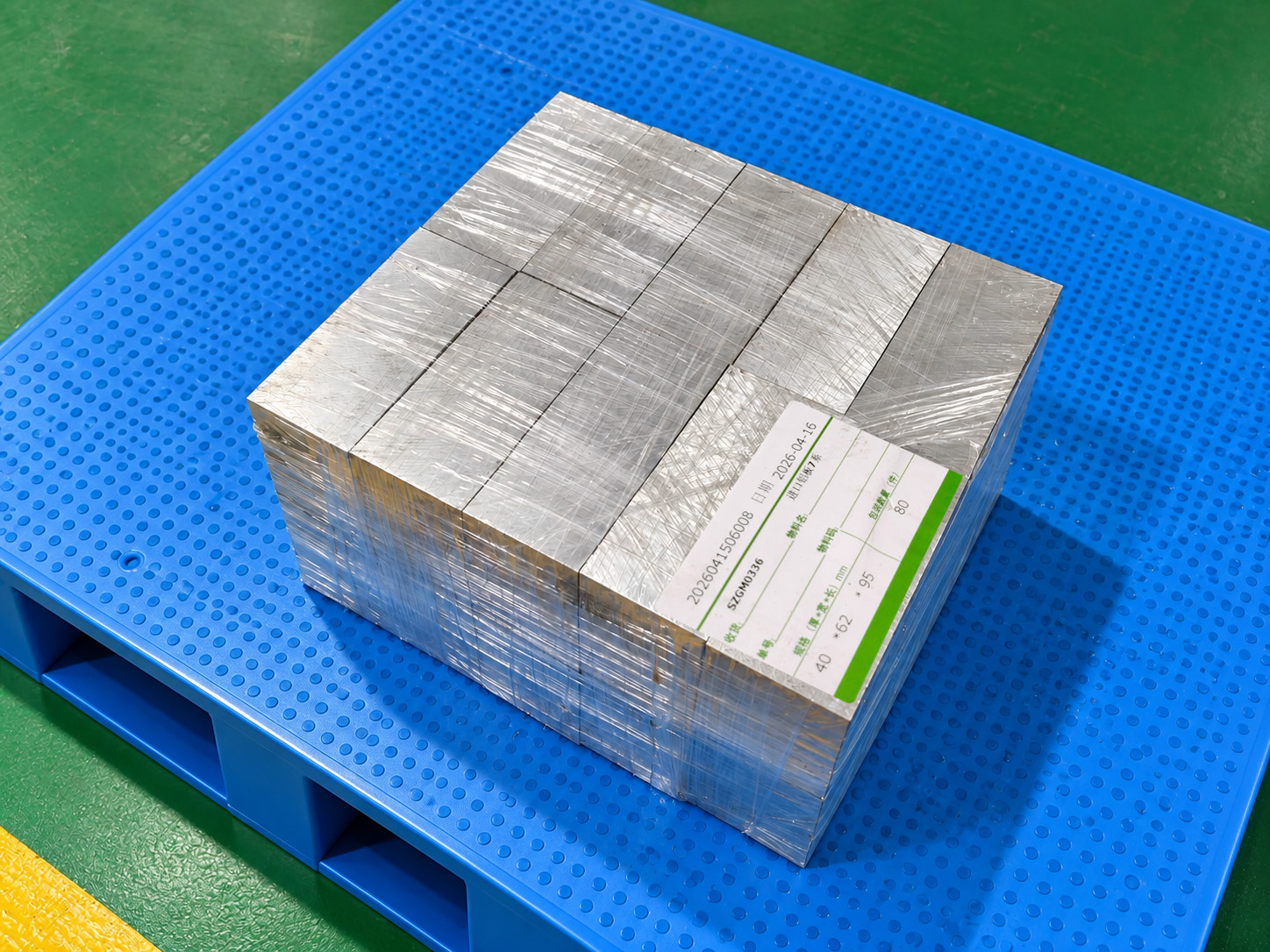
The material must fit the design and the operating conditions
A material designation alone is not a pressure rating. Two blocks made from the same grade can have different wall sections, threaded interfaces, intersecting passages and load histories. The responsible design engineer selects and approves the material and structure for the application; Zhongwei reviews the supply, machining, finishing and inspection requirements needed to manufacture that design.
Understand the duty
Include working pressure, peaks and cycles, temperature, fluid and external exposure. A maximum pressure value alone leaves out conditions that can affect the engineering assessment.
Understand the geometry
Identify minimum wall sections, cavity and port spacing, thread engagement, sealing features and compact passage intersections. A stronger alloy does not remove the need to assess these relationships.
Understand the whole route
Consider blank form, heat treatment, welding, final coating and the required delivery condition. Availability, machining effort and inspection requirements affect the practical material route.
Use this guide to organize the decision and prepare a clear specification. It does not assign a universal pressure boundary between aluminum, iron and steel.
Review the drawing and manufacturing risksCompare material families before comparing individual grades
The examples below reflect Zhongwei’s recorded project material range and the commonly used ductile iron grades confirmed by our team. They are discussion starting points, not a stock list or a ranking from best to worst. Availability and suitability are confirmed for each enquiry.
| Material family | Common or project grade references | What the route can address | What still needs review |
|---|---|---|---|
| 6000-series aluminum | 6061, 6082 and 6110; specify the required temper. | A lower-mass block with the required balance of mechanical properties, machining and finish. | Confirm product form, section, temper and final treatment. Similar alloy numbers or a shared series do not approve substitution. |
| Higher-strength aluminum routes | 2017 / 2017A, 2024 and 7075; exact grade and temper matter. | Projects where the design calls for particular strength or fatigue characteristics while retaining aluminum. | Review environment, local thread loads and anodized appearance. Higher strength does not establish the pressure rating or guarantee uniform color. |
| Free-cutting steels | AISI 1215 in cold-drawn/cold-finished condition; 11SMn30 with the specified supply condition. | Machining-focused steel manifold projects where the approved material properties meet the duty. | Cold-finished and hot-rolled stock cannot be assumed to have the same properties. Confirm section availability and corrosion protection. |
| Cylinder-end and structural steels | Q355B and GB 45 are different materials used in Zhongwei cylinder-end projects. | Valve blocks integrated into cylinder-end components, including designs intended for welding. | Assess the actual grade, condition, joining procedure and final machining stage. GB 45 needs its own welding assessment. |
| Steels with specified strength and heat treatment | C35E+QT, S50C, AISI 4140 and 42CrMo are separate project references. | Designs requiring an approved strength, toughness and fatigue-property combination. | Define heat treatment, hardness where required and relevant section properties. Listing these grades together does not mean they are equivalents. |
| Ductile iron | Zhongwei commonly uses QT450-12 and QT500-7. | Manifold projects specifying the relevant ductile iron properties and blank quality. | For QT450-12, confirm the governing material or supplier specification and certificate basis. Specify casting or continuous-cast bar requirements separately. |
| Stainless steels | 304, 316 and 17-4PH; specify the exact grade and supply or aging condition. | Projects requiring a documented combination of corrosion resistance, strength and manufacturing characteristics. | Assess fluid, temperature, chlorides, crevices and stress. An industry label such as marine does not establish suitability. |
Keep the full material designation in the enquiry. QT450-12 is retained as used in our procurement; it is not silently renamed QT450-10 or ASTM 65-45-12.
Aluminum grades and machining Ductile iron grades and blank quality Stainless steel grades and conditionsOrder the material condition, not just the grade name
Aluminum temper and product form
State the specified temper and whether the blank is plate, bar or another approved form. Confirm the applicable product standard and section range. Different tempers or forms are not interchangeable simply because the alloy number matches.
Steel delivery and heat treatment
Retain +QT when C35E is specified in the quenched-and-tempered condition. For 4140 or 42CrMo, define the required condition and final properties rather than assuming that all stock arrives with the same hardness. For free-cutting steel, identify cold-drawn/cold-finished or other approved supply condition.
Stainless aging and iron certification
For 17-4PH, include the approved aging condition. For ductile iron, confirm blank form, sampling and certificate basis. An acceptance requirement for a particular product form cannot be transferred to another form using only a similar grade name.
Size also matters to procurement: confirm the required blank section, machining allowance and the properties applicable to that section. Do not replace a specified cold-finished blank with a larger hot-rolled blank without reviewing the changed material condition.
Reference: Hydro alloy and temper information. Product form and temper are part of the material definition; extrusion data does not automatically apply to plate or every bar product.
Reference: Ovako C35 material data. Read grade, delivery condition and applicable properties together.
Reference: Ovako 42CrMo4 material data. Its condition- and size-dependent data illustrates why a grade name alone is insufficient.
Check welding, fluid exposure and external protection together
A cylinder end that will be welded
Q355B and GB 45 require different material and welding assessments. Share the joint, section, restraint and intended sequence of machining, welding and any heat treatment. The responsible welding procedure must define its controls, and the final inspection stage must match the delivery scope.
A manifold in a corrosive environment
Separate the fluid inside the block from the atmosphere, splash, process chemicals or immersion outside it. Specify chemistry, concentration and temperature where relevant. 316 is not an automatic approval for seawater, and 17-4PH is not a universal corrosion upgrade from 316.
A block that will receive a coating
Consider internal passages as well as visible faces. Specify the protection needed and which dimensions, threads or sealing features must remain within tolerance after treatment. Coating selection and coverage need review for the actual geometry and material condition.
Steel manifold finish options include black oxide (blackening), phosphating, electroless nickel, zinc and zinc-nickel, as specified for the application. Define the required surfaces, final dimensions and protection conditions; none is the default for every steel block.
Q355B and GB 45 cylinder-end valve blocks intended for welding are supplied as machined parts immersed in a no-clean rust-preventive oil and packed in sealed, dust-protective PE bags, without plating, black oxide or phosphating. The specified oil supports welding without a separate oil-removal step, subject to compatibility with the agreed welding procedure.
A change made to solve one requirement can affect another. A heat treatment, weld cycle or coating route may change the final material or dimensional condition. Coordinate these operations with finishing and the agreed checks rather than reviewing them as unrelated purchases.
Reference: TWI welding hydrogen-cracking guidance. Composition, section, joint conditions and hydrogen control influence the welding assessment. Use the approved procedure for the actual assembly.
Reference: Outokumpu stainless steel corrosion guidance. Corrosion behaviour depends on the environment, geometry and stress as well as the alloy.
Cylinder-end valve blocks Surface treatment and final-condition controlUse Chinese, European and US references as a review starting point
Material cross-reference tables help identify possible candidates; they do not authorize a substitution. The aluminum, ductile iron and stainless steel product pages contain their detailed Chinese, European and US comparison tables. Keep those grade-specific conditions with the comparison.
Chinese / European / US aluminum references Chinese / European / US ductile iron references Chinese / European / US stainless referencesSteel references for cylinder-end projects
These two comparisons support the Q355B and GB 45 cylinder-end discussions. They are not declarations that a particular batch meets multiple standards. Q355B must not be treated as automatically equivalent to E355 or P355.
| European comparison reference | US comparison reference | Chinese grade used in these projects | Approval before substitution |
|---|---|---|---|
| S355JR — EN 10025-2 | ASTM A572/A572M Grade 50 | Q355B — GB/T 1591 | Structural-steel comparison candidates, not certified equivalents. Compare product form, section-dependent properties, chemistry, impact requirements, supply condition and welding suitability. Do not automatically substitute E355 or P355. |
| C45 / C45E — confirm the applicable product specification | SAE / AISI 1045 — confirm product specification and condition | 45 steel — GB/T 699 | Medium-carbon comparison references. Check chemistry, heat treatment, hardness and section properties. A welding assessment is required for the actual grade and joint; do not copy the Q355B welding route. |
Reference: SSAB S355 product requirements. Product data describes the named European steel, not certification of a Q355B batch.
Reference: SSAB ASTM A572 Grade 50. Compare the applicable product and thickness requirements before considering a substitution.
Reference: Ovako C45 and similar designations. Similar designations are comparison references; the ordered standard and condition govern acceptance.
Approve the proposed alternative against the original requirement
Compare the standards and editions, chemistry, product form, section, mechanical requirements, supply condition, welding and finishing implications, and certificate scope. Record any difference and obtain the design owner’s approval before the replacement material is purchased or used. A higher strength value alone is not an equivalence decision.
Connect the chosen material to the difficult machined features
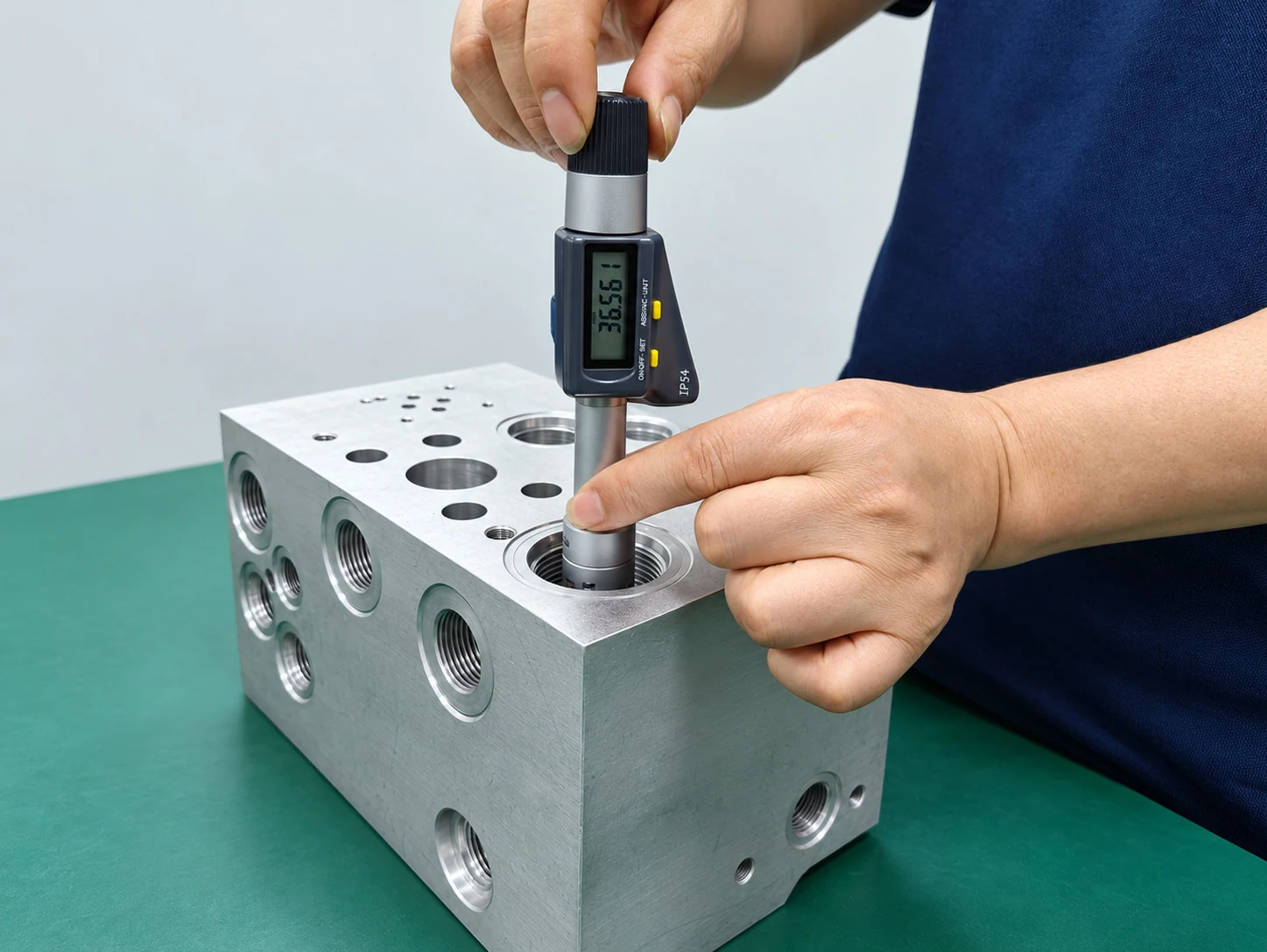
Valve cavities and sealing surfaces
Zhongwei’s experience includes machining sealing features in Q355B, GB 45 and steels with specified heat-treatment conditions. Tool selection, finishing allowance, cutting conditions and tool wear are considered against the actual cavity and surface requirements.
Deep and angled intersections
Material condition is one input to the process route for deep passages, oblique intersections and compound-angle holes. Plan tool access, cutting and chip removal to preserve the required bore quality and reduce burr formation, then complete the necessary deburring and checks.
Where appearance matters, agree an appropriate sample and acceptance reference. Process optimization can improve anodized appearance for 2017, 2024 and 7075 projects, but it cannot justify a blanket promise of no color variation or spotting.
Discuss cost through the full route: material supply, blank preparation, tooling, finishing, cleaning and verification. An easily machined grade is useful only when its approved properties meet the design requirements.
Valve cavity tools and finishing Complex intersecting passages Deburring and cleaningVerify the ordered material and the manufactured part
Before the blank is used
Check material identification and the agreed documentation against the ordered grade, condition and applicable specification. Define additional hardness or other material checks when the project requires them.
After the relevant operations
Inspect the dimensions, threads, specified bore geometry, sealing-surface roughness and burr removal against the approved drawing. Agree whether particular checks apply before or after heat treatment, welding or surface treatment.
At delivery and on repeat orders
Link material and inspection records to the delivered part, revision and batch identification. Record approved substitutions and changed conditions so the next order follows the released requirements.
Material certificates and dimensional reports can be provided. Specific certificate types, first-article and CMM reporting are agreed by project. A certificate establishes only what it covers; a dimensional measurement does not independently identify alloy chemistry.
Pressure and functional testing are not routine checks for the machined manifold block. Our normal acceptance work verifies the specified material and drawing conformity; material and structural suitability remain part of the responsible engineer’s design assessment.
Inspection and measurement scope Material documentation and traceabilityQuestions about hydraulic manifold material selection
Can aluminum be selected below one pressure and steel above it?
No universal pressure boundary applies to all custom manifolds. The material condition, wall sections, interfaces, peaks, cycles, temperature and environment must be assessed for the design. Zhongwei reviews the manufacturing implications of the approved requirements.
Is 7075 always a better choice than 6061 or 6082?
No. Its strength characteristics may be relevant to a particular design, but corrosion exposure, temper, local geometry, anodized appearance and supply requirements still matter. A change needs the design owner’s review rather than selection by strength alone.
Which ductile iron grades do you commonly use?
QT450-12 and QT500-7. For QT450-12, confirm the governing material or supplier specification and certificate basis. It is not automatically relabelled as another QT or ASTM grade.
Can hot-rolled material replace specified cold-finished steel?
Only after review and approval of the changed specification. Product form and processing condition can affect the applicable properties and manufacturing route, so matching the grade name alone is insufficient.
What does +QT mean in C35E+QT?
It identifies the quenched-and-tempered condition. Keep that requirement in the order and confirm applicable properties, section size and any required hardness or documentation.
Does 316 or 17-4PH automatically suit chemical or marine service?
No. Define the fluid and external environment, temperature, chlorides, exposure conditions and relevant stresses. 17-4PH also needs a specified aging condition. Suitability requires the actual application assessment.
Can you use an equivalent local grade?
We can discuss a proposed comparison candidate and its supply information. Review the full requirements and material documentation; any differences and the substitute need design-owner approval before use.
Who approves material selection?
The responsible design engineer approves material and structural suitability. Zhongwei contributes manufacturing and supply experience, identifies questions and produces and inspects the part against the approved requirements.
Share the material requirement with the manifold drawing
Include the current drawing and model, specified grade and standard, supply or heat-treatment condition, blank form, relevant operating conditions, surface treatment and required records. Mark welding interfaces, critical sealing surfaces and complex internal passages. If considering an alternative, provide the proposed specification and identify what needs approval.
Send DWG, DXF, PDF or JPG drawings and STEP, X_T, IGS or SLDPRT models by email or WhatsApp. Complete manifold drawings are preferred; a schematic can start the discussion. Include sample and batch quantities so availability and the manufacturing route can be reviewed together.
Prepare the project enquiry