

Start with the component your equipment needs
Custom hydraulic manifold blocks, also called hydraulic valve blocks, bring valve interfaces and internal flow passages into one machined component. Your design may prioritize a compact envelope, a specific valve arrangement, installation interfaces or integration with a hydraulic cylinder. Those details determine what we review and manufacture.
Screw-in cartridge valve manifolds
Blocks with specified cartridge cavities, ports and internal connections. Review the governing valve models, cavity drawings and sealing features, together with the passages that connect them.
Cartridge valve manifoldsPower unit manifolds & valve plates
Custom blocks and plates for power units, including combinations of valve mounting faces, cartridge cavities and external interfaces. Align port positions, mounting details and the required finished surfaces.
Power unit blocks and platesValve-integrated cylinder ends
Cylinder-end and cylinder-head components that combine structural interfaces with valve cavities and passages. Review the hydraulic features alongside the material, sealing areas and any subsequent welding route.
Cylinder-end valve blocksHydraulic control blocks, logic-valve blocks, proportional-valve manifolds and mixed-interface arrangements are reviewed against their specific drawings. The intended function comes from the approved circuit and valve selection.
Explore equipment and application requirementsA cylinder end can also carry the valve functions
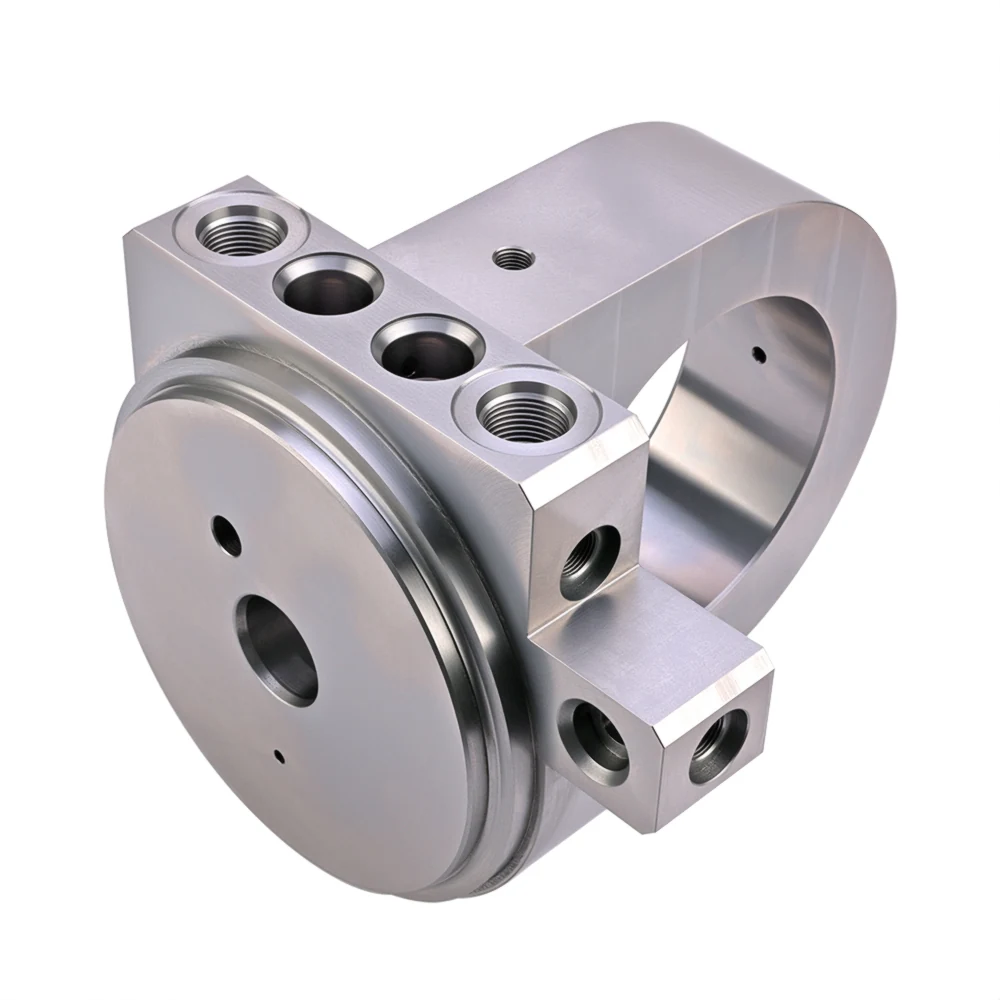
Structural interfaces and hydraulic features in one part
Valve-integrated cylinder ends can place the specified control features within the cylinder-end component. The manufacturing review connects valve-cavity geometry and sealing surfaces to structural dimensions, material condition and the agreed next operation.
Q355B and GB 45 steel are part of Zhongwei’s experience with cylinder-end blocks intended for welding. On these materials, tooling and machining sequence need particular attention around the specified valve-cavity sealing surfaces.
See cylinder-end machining and material comparisonsQ355B and GB 45 cylinder-end valve blocks intended for welding are supplied as machined parts immersed in a no-clean rust-preventive oil and packed in sealed, dust-protective PE bags, without plating, black oxide or phosphating. The specified oil supports welding without a separate oil-removal step, subject to compatibility with the agreed welding procedure.
Then review the material specified for your design
Aluminum manifolds
Common project materials include 6061-T6, 6082-T6 and 7075-T6, with experience in customer-specified 2017, 2024 and 6110. Confirm the alloy, temper, stock form and finish for the actual drawing.
Aluminum grades and machiningDuctile iron manifolds
QT450-12 and QT500-7 are commonly used in Zhongwei’s projects. Retain the actual grade and certificate requirements when comparing Chinese, European and US references.
Ductile iron grades and comparisonsStainless steel manifolds
Our project material range includes 304, 316 and 17-4PH. The specified grade and condition are reviewed with the component geometry, surface requirements and service environment.
Stainless steel materialsCarbon and alloy steel blocks
Project materials include Q355B, GB 45, C35E+QT and AISI 4140. Welding intent, material condition, finishing and the approved design influence the manufacturing and delivery route.
Steel options and material selectionMaterial selection belongs to the responsible design engineer and considers operating conditions, geometry, wall sections, fatigue, environment and the required delivery condition. We do not assign a universal pressure rating to a material name.
The detailed material pages provide Chinese, European and US comparison references. Similar properties or familiar names do not authorize substitution; the approved specification, supply condition and certificate remain the basis for the order.
Steel manifold finish options include black oxide (blackening), phosphating, electroless nickel, zinc and zinc-nickel, as specified for the application. Define the required surfaces, final dimensions and protection conditions; none is the default for every steel block.
Review surface treatment managementFocus acceptance on the features inside the block
Cavities and sealing interfaces
Follow the specific valve and interface references. Check the applicable diameters, depths, threads, geometric relationships and designated sealing surfaces.
Review valve and interface requirementsComplex internal connections
Deep passages, oblique intersections and compound-angle holes need a coordinated process. Connect position and direction control to burr reduction, deburring and cleaning access.
Explore complex passage machiningMaterial and drawing conformity
Verify the supplied material and specified part features. Material certificates and dimensional reports support the agreed delivery; detailed first-article and CMM scope is defined by project.
See the acceptance and quality planPressure and functional testing are not routine checks for our machined manifold blocks. Any separately requested test or formal component cleanliness verification needs an agreed scope before it is included in the order.
Connect the first enquiry to a repeatable order
01 · Share the project
Send the current part drawing and model, material and condition, quantities and valve references. A schematic or sample can start a discussion when the part definition is still developing.
Start an engineering review02 · Agree the sample basis
Resolve open requirements and define the sample inspection and approval scope. Keep accepted changes connected to the drawing revision, material, tooling and final delivery condition.
Documents and traceability03 · Carry decisions into production
Use the approved definition and relevant sample findings for repeat orders. Confirm quantities, timing and any changes before the affected manufacturing work proceeds.
Sample-to-batch productionQuestions before selecting a manifold manufacturing partner
Can you manufacture from our own manifold drawings?
Yes. Share the approved drawing and model with the material, valve-cavity references, surface requirements and inspection expectations. We review the manufacturing scope and clarify any conflicting or missing details before production.
Can we begin with only a hydraulic schematic?
Yes. A schematic and valve list can start the discussion. We agree the missing inputs, engineering responsibilities and the approved part definition needed for machining.
Are valves, plugs or other assembly items included?
Confirm the supply scope in the enquiry. A machined block and an assembled valve module have different requirements. Any requested assembly items, installation requirements and additional verification are agreed for the project.
Can a European or US material replace the Chinese grade?
A comparison table is a starting point for review. Substitution requires approval of the actual standard, grade, material condition, product form and relevant properties; a comparison reference is not automatic equivalence.
Do product photographs define what we will receive?
They show examples of Zhongwei’s work. Your approved drawing, material, finish, supply scope and acceptance requirements define the component for your order.
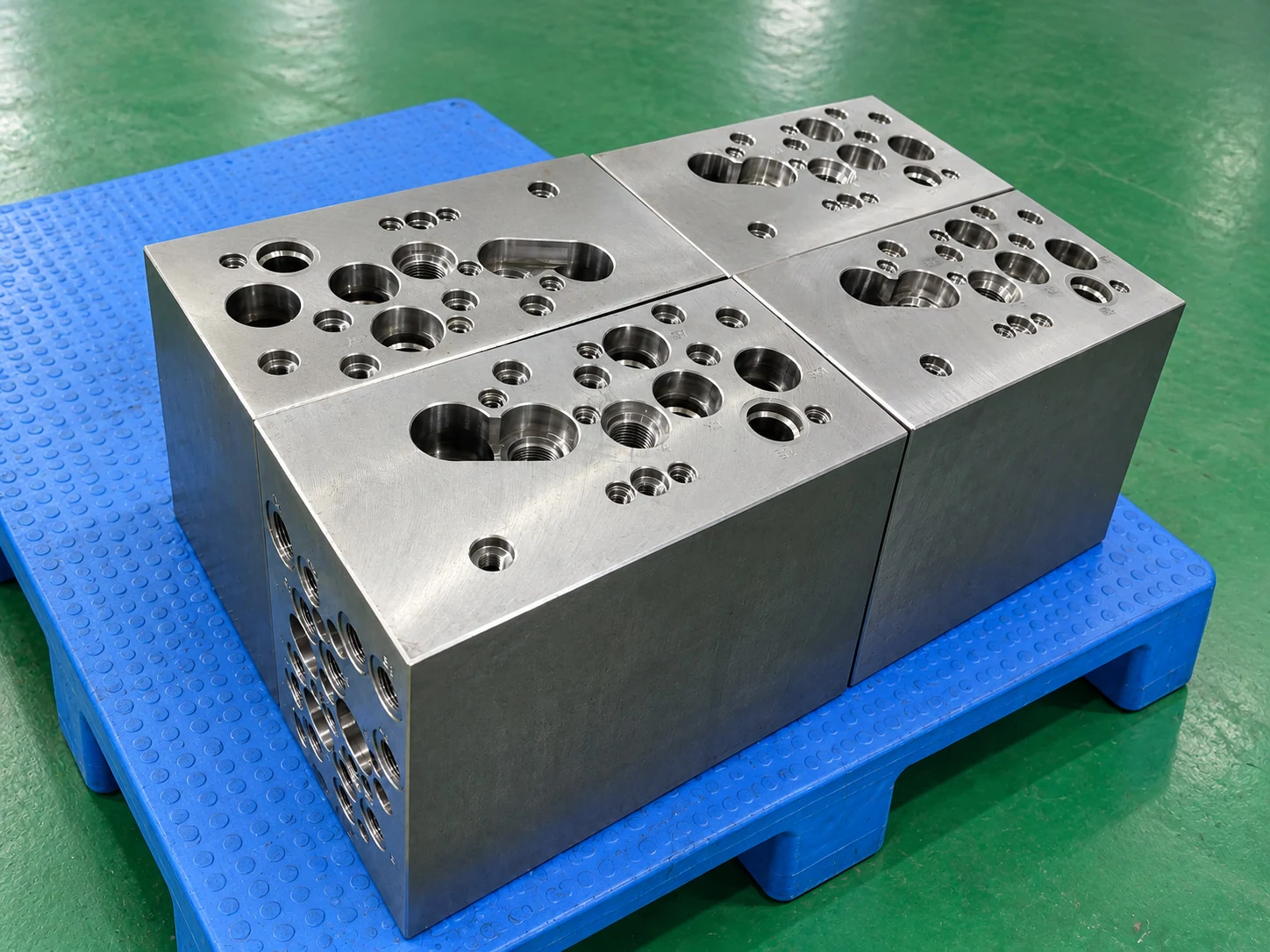
Send the drawing and the requirement that matters most
Tell us which manifold or cylinder-end component you need, the project stage, material, quantity and any difficult feature. Complete manifold drawings are preferred; a schematic can begin the discussion. Let us know if an NDA is needed before sharing project details.
We accept DWG, DXF, PDF and JPG drawings, and STEP, X_T, IGS and SLDPRT models by email or WhatsApp.
Prepare your project enquiry